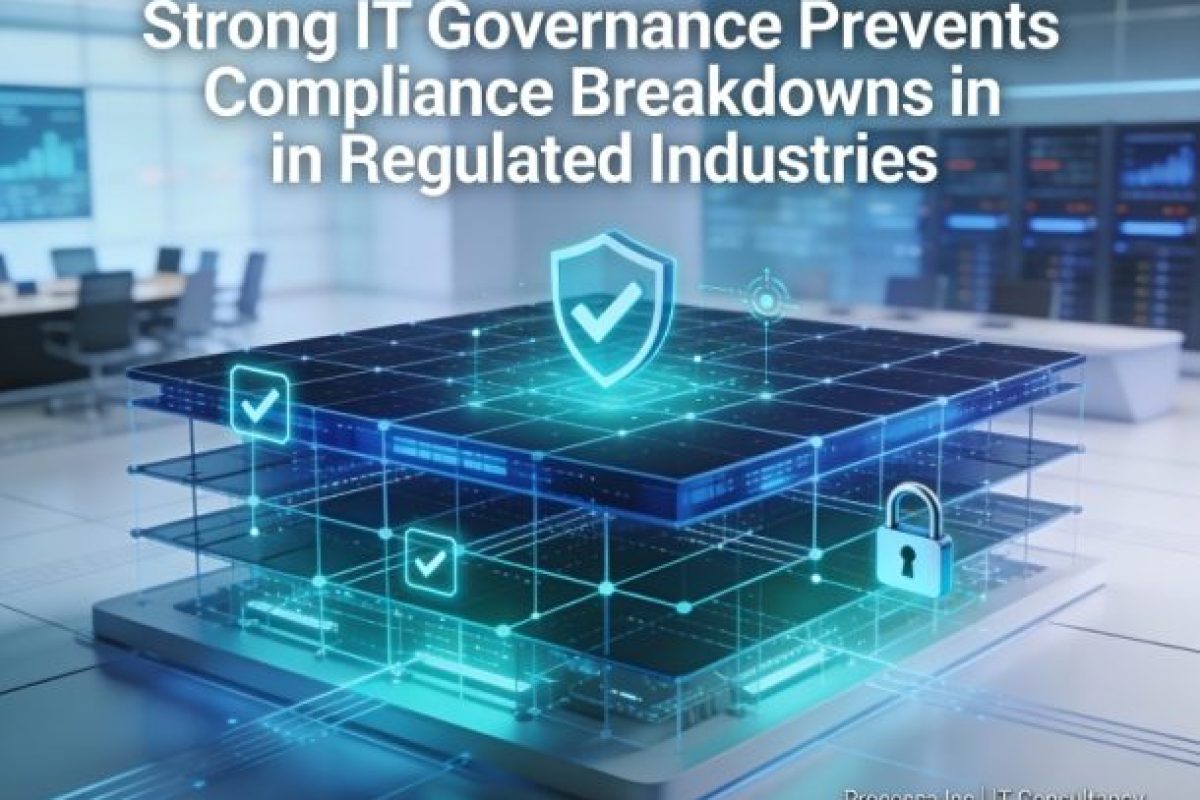
In an increasingly data-driven world, compliance has evolved beyond a legal checkbox—it has become a strategic necessity. For organizations operating in regulated industries such as finance, healthcare, and energy, maintaining compliance with global and regional standards is vital to safeguarding reputation, operational continuity, and customer trust. Yet, many compliance failures originate not from inadequate rules, but from weak IT Governance Compliance frameworks that fail to align people, processes, and technology.
Strong IT governance bridges this gap by ensuring that information systems are managed responsibly, securely, and in line with regulatory obligations. It provides leadership with visibility, accountability, and structured control over how IT resources are utilized to meet compliance expectations.
The Critical Role of IT Governance in Compliance
At its core, IT Governance Compliance defines the policies, roles, and structures that guide how technology supports business goals while ensuring adherence to external regulations. It is a strategic layer that aligns IT operations with laws, industry frameworks, and ethical standards.
In regulated sectors—where sensitive data, financial transactions, or patient records are at stake—governance provides the foundation for accountability. Without it, compliance programs risk becoming reactive, inconsistent, and vulnerable to breakdowns.
For example, an organization may invest in cybersecurity tools or audit software, but if governance policies are unclear or fragmented, these tools may not be applied effectively. A robust governance model ensures that every IT activity—from access control to vendor management—is executed within a structured compliance framework.
Why Compliance Breakdowns Occur
Even the most sophisticated companies can experience compliance failures when IT governance is weak or improperly implemented. Common causes include:
-
Siloed Operations: Lack of collaboration between IT, risk, and compliance departments leads to information gaps.
-
Undefined Roles and Responsibilities: Ambiguity in ownership of compliance processes often causes oversight failures.
-
Poor Data Governance: Inconsistent data handling practices can lead to breaches, privacy violations, or reporting inaccuracies.
-
Reactive Compliance Culture: Treating compliance as a one-time audit requirement rather than an ongoing process weakens institutional integrity.
-
Legacy Systems and Unmonitored Vendors: Outdated technology and unvetted third-party systems can introduce significant regulatory risks.
Addressing these vulnerabilities requires strong IT governance structures that embed compliance into the very DNA of operations.
Elements of a Strong IT Governance Framework
A well-designed IT governance model ensures sustainable IT Governance Compliance through clear accountability, transparency, and control. Its key components include:
1. Governance Structure and Leadership
Establishing a governance board or committee with representation from IT, legal, and compliance teams ensures unified oversight. Senior executives play a crucial role in setting the tone for accountability and ethical decision-making.
2. Policy and Standardization
Policies must define acceptable use, data classification, and risk thresholds. Standardized frameworks, such as COBIT, ISO/IEC 27001, and ITIL, help maintain consistent compliance processes.
3. Risk Management and Internal Controls
IT governance integrates proactive risk assessment into operational planning. Regular audits, penetration testing, and control evaluations help prevent compliance gaps before they escalate into incidents.
4. Performance Metrics and Continuous Monitoring
Key performance indicators (KPIs) and compliance dashboards help track adherence to standards and identify trends that require corrective action.
5. Documentation and Transparency
Every compliance-related decision and process should be well-documented. Transparency supports both regulatory audits and internal accountability.
How IT Governance Strengthens Regulated Industries
The industries most dependent on regulatory frameworks—such as banking, insurance, energy, and healthcare—are also those that gain the most from strong governance.
Finance and Banking
In the financial sector, regulations like Basel III, PCI DSS, and anti-money laundering (AML) laws require strict data security and reporting integrity. Effective IT Governance Compliance ensures that systems handling sensitive financial data remain aligned with these evolving standards.
Healthcare
With the rise of digital health records and telemedicine, healthcare organizations must comply with laws like the UAE’s PDPL and ADHICS. Governance frameworks help define access control, patient data protection, and cybersecurity best practices to ensure confidentiality.
Energy and Utilities
In critical infrastructure, compliance ensures operational resilience against cyberattacks or system failures. Governance frameworks maintain visibility across assets, vendors, and incident response mechanisms.
Public Sector
Government entities benefit from governance structures that align digital transformation initiatives with regulatory obligations, ensuring responsible technology adoption and public data protection.
The Relationship Between Governance and Risk Reduction
Strong IT governance acts as the first line of defense against compliance breakdowns by embedding risk management into every digital process. Rather than treating governance as a separate function, successful organizations integrate it into daily operations—from procurement and cloud adoption to employee training.
When governance frameworks are properly enforced, they create an ecosystem of continuous improvement. This enables businesses to identify risks early, adapt to new regulations efficiently, and sustain long-term compliance maturity.
Case Insight: Governance-Led Transformation
Many UAE-based organizations have realized that compliance without governance is unsustainable. Companies that once relied on reactive audits now invest in strategic governance frameworks to ensure resilience.
For instance, Processa Information Technology Consultancy helps businesses design and implement governance structures aligned with ISO and UAE national standards. By combining compliance advisory with advanced IT controls, Processa ensures that organizations can monitor and manage compliance in real time.
This governance-led approach empowers leadership teams to make informed decisions, allocate budgets effectively, and anticipate compliance changes well before they become liabilities.
Building a Culture of Compliance Through Governance
The most effective compliance strategies are those supported by culture. Employees, vendors, and executives must all understand their roles in maintaining IT Governance Compliance. Regular training sessions, awareness programs, and transparent reporting mechanisms create an environment where accountability thrives.
Moreover, when organizations encourage cross-departmental collaboration between IT, compliance, and legal teams, compliance becomes a shared responsibility rather than an isolated function.
ISO Standards and Governance Integration
Organizations pursuing certifications such as ISO 27001, ISO 20000, or ISO 22301 often discover that governance is the backbone of certification success. As a leading ISO Consultancy in the UAE, Processa assists businesses in establishing frameworks that not only achieve certification but also maintain it through continual monitoring and improvement.
By aligning ISO principles with internal governance, companies enhance resilience, streamline audits, and reduce the cost of non-compliance.
Long-Term Benefits of Strong IT Governance
-
Sustained Regulatory Confidence: Demonstrates proactive compliance to regulators and auditors.
-
Operational Efficiency: Aligns technology investments with business objectives.
-
Reduced Incident Impact: Prevents breaches and ensures faster recovery during compliance events.
-
Improved Stakeholder Trust: Strengthens customer confidence through ethical data management.
-
Future Readiness: Ensures adaptability to new laws and emerging technologies.
In regulated industries, these benefits go beyond compliance—they define the organization’s capacity to innovate securely and sustain market leadership.
Conclusion
In the modern regulatory environment, compliance failures are rarely caused by ignorance of laws—they stem from weak governance practices that fail to anticipate risk. Building a strong IT Governance Compliance framework transforms compliance from a reactive burden into a proactive strategy for business excellence.
By aligning policies, people, and technology within a structured governance model, organizations create an unshakable foundation for transparency, accountability, and trust.
Partnering with experienced consultants such as Processa Information Technology Consultancy ensures that governance is not just a function—it becomes a culture. For regulated industries in the UAE, investing in governance today secures compliance and competitiveness for the future.
Frequently Asked Questions (FAQs)
1. What is IT Governance Compliance, and why is it important?
IT Governance Compliance ensures that all IT processes align with regulatory standards and business goals, preventing legal and operational risks.
2. How does strong IT governance prevent compliance failures?
It establishes clear accountability, risk controls, and monitoring systems that detect potential non-compliance before it impacts operations.
3. Which industries benefit most from IT Governance Compliance?
Sectors like finance, healthcare, energy, and government benefit most, as they handle sensitive data and face strict regulatory oversight.
4. How can Processa Information Technology Consultancy help?
Processa provides tailored IT governance and compliance solutions, integrating best practices and ISO standards to strengthen organizational resilience.
5. Why should companies in the UAE invest in IT governance now?
With increasing data protection and cybersecurity laws, proactive governance ensures long-term compliance, reduces risks, and builds customer trust.